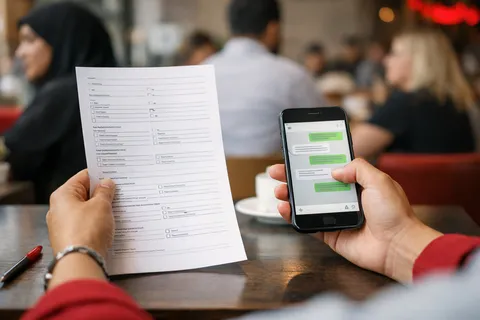
Your website was written to persuade. An assistant needs something slightly different: plain facts it can quote without guessing. A short list of well-written questions and answers fills that gap, and it takes less than an hour.
Start from real questions
Do not invent questions. Look at your inbox, your WhatsApp chats and what your receptionist hears every day. Write the ten questions you answer most often, in the words customers use.
"How much is a cleaning?" is a better question than "Pricing information for dental hygiene services".
One fact per answer, stated plainly
Answer in one to three sentences. Put the fact first: "A cleaning costs AED 300 and takes 45 minutes." Then add the condition that matters: "Insurance patients pay their co-payment only."
Avoid answers that say "it depends" without saying on what. If it depends, write the cases down.
Include prices, conditions and exceptions
Customers ask about money, time and rules. Give prices with what they include, opening hours with holiday exceptions, and policies with their time limits.
If something is not offered, say so: "We do not deliver outside Dubai." A clear no is better than an assistant that cannot answer.
Leave out what should not be answered automatically
Some questions need a person: medical advice, legal opinions, complaints, refunds for a specific order. Do not write answers for those. When an assistant like Selo Assist has no answer, it tells the customer and offers to connect them with your team.
Also leave out anything you would not tell any visitor, such as internal prices or staff details.
Keep them up to date
Review your FAQs whenever prices or policies change. In Selo Assist, the dashboard lists questions the assistant could not answer, each with a button to add the answer; that list is your best source of new FAQs.