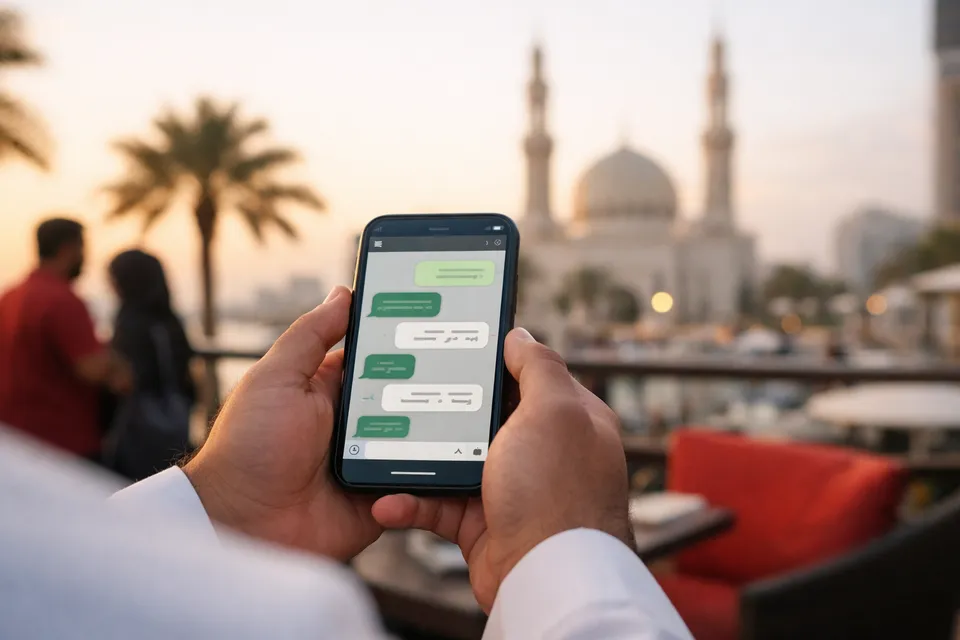
Arabic is spoken by hundreds of millions of people, and in the Gulf many customers move between Arabic and English several times a day. A business that answers comfortably in both earns trust that a translated afterthought never does.
Get right-to-left right
Arabic text reads right to left, and so should the layout around it: chat bubbles, buttons, lists and icons. Broken direction, where punctuation jumps to the wrong end or numbers flip, looks careless.
Test any chat or form on your site with a real Arabic sentence that includes a number and an English word.
Expect dialects and mixed messages
Customers rarely write formal Arabic in a chat. They use Gulf, Egyptian or Levantine dialect, switch to English for a product name, or type Arabic with Latin letters.
Whoever, or whatever, answers needs to understand all of these. Selo Assist reads dialects and mixed messages and replies in clear Arabic.
Greet in both languages
A greeting such as "مرحباً! Hello!" tells customers immediately that Arabic is welcome. It costs nothing and removes hesitation.
Mind the tone
Courtesy matters. Greetings, thanks and polite closings are expected, and an abrupt reply reads as rude. In Selo Assist you can set a formal or friendly tone for the assistant.
Respect the calendar
Working hours change during Ramadan and around Eid, and customers ask about them. Update your hours and add a note when your schedule changes, so the assistant answers correctly.